
Turn Google Maps Visibility Into Measurable Brick-and-Mortar Revenue
Dominate your local market with data-driven map optimization.
We engineer top-3 Map Pack rankings for businesses in Berkley and the surrounding metro area using forensic grid-tracking data. Stop guessing with vanity metrics and start correlating your local search presence directly to inbound phone calls and foot traffic.
312%
Average Call Volume Increase
Measured across our Berkley-based service businesses within the first 120 days of GBP optimization.
4.2 Miles
Proximity Expansion
The average distance we push a Royal Oak or Berkley client’s local pack visibility outward from their physical address.
14,500+
Local Grid Points Tracked
We monitor highly localized search coordinate data daily across Detroit, Pontiac, and Berkley to measure exact ranking shifts.
The Forensic Local SEO Methodology
1
Map Your Current Search Grid
We deploy geogrid tracking software across a 5-mile radius of your physical location to measure exactly where you rank in the Map Pack for high-intent keywords. This baseline data exposes your exact proximity drop-off points.
2
Execute Technical GBP & Schema Optimization
We restructure your Google Business Profile categories, standardize NAP data across tier-one aggregators, and inject localized schema markup into your website architecture. This establishes the geographic relevance Google’s algorithm requires for top-3 placement.
3
Measure Correlated Revenue Impact
We implement dynamic call tracking and conversion routing to tie every Map Pack click directly to your bottom line. You see exactly how many booked appointments and store visits originated from our optimization work.
Verified Proximity Expansion Data

HVAC Contractor, Berkley
Before: Stuck at position 8 in the local pack for ‘AC repair near me’ just 1.5 miles from their office.
After: Captured the #1 spot across a 4-mile radius, generating 47 additional inbound service calls per month.
⏱ 110 Days
Personal Injury Law Firm, Detroit
Before: Invisible in the Map Pack outside a 0.5-mile radius of their downtown office.
After: Expanded top-3 visibility to a 3.2-mile radius, resulting in a 215% increase in driving direction requests.
⏱ 6 Months
Dental Practice, Royal Oak
Before: Losing high-value implant queries to a competitor located further away due to poor review velocity and category mismatch.
After: Reclaimed the #2 position for ‘dental implants,’ adding $42,000 in attributed monthly production.
⏱ 90 Days
Data-Driven Optimization Infrastructure
🗺️ Geogrid Rank Tracking
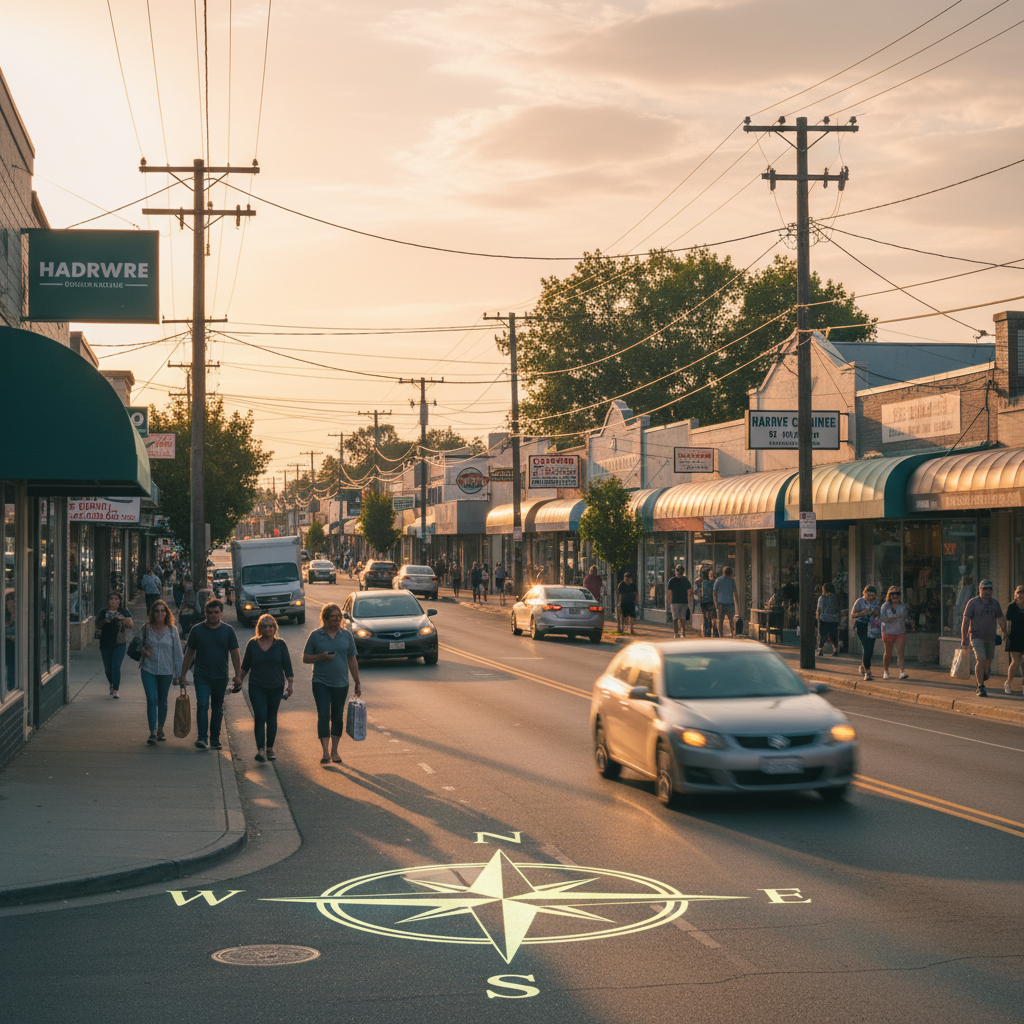
Standard rank trackers fail local businesses because they only check one GPS coordinate. We measure your Map Pack position across hundreds of micro-locations in Berkley and Pontiac to identify exactly where your visibility dies.
🔍 Forensic NAP Auditing
Inconsistent Name, Address, and Phone number data fractures your local authority. We run a diagnostic scan across primary data aggregators and manually correct discrepancies that suppress your proximity radius.
⭐ Review Velocity Engineering
The Local Pack algorithm prioritizes reputation signals. We implement automated SMS review routing systems that consistently generate authentic, keyword-rich customer feedback to outpace your local competitors.
💻 Entity & Local Schema Injection
We hardcode your precise geographic coordinates, service areas, and business entity data directly into your website’s source code. This feeds Google’s crawlers the exact structured data they need to validate your location.
📊 Closed-Loop ROI Attribution
Impressions and clicks do not pay payroll. We integrate UTM tracking on your GBP links and deploy call-tracking numbers to prove exactly how much revenue your Map Pack presence generates.
Frequently Asked Questions
Why does my business rank #1 at my office but disappear a mile away?
Google Maps prioritizes proximity to the searcher. If your website lacks strong localized entity signals and your GBP lacks authority, the algorithm restricts your visibility to a tight radius around your physical address. We build the authority required to expand that radius.
How long does it take to enter the top 3 of the Local Pack?
For a business in a moderately competitive market like Royal Oak or Pontiac, foundational optimization takes 30 days, with measurable grid expansion occurring between days 60 and 90. Highly saturated markets like downtown Detroit require 4 to 6 months of sustained review velocity and citation building.
Do you use automated software to build local citations?
No. Automated citation tools create duplicate listings and messy data that actively harm your ranking. We manually audit and build citations on tier-one directories to ensure 100 percent NAP consistency across the local search ecosystem.
Can you guarantee a #1 ranking in the Map Pack?
Any agency guaranteeing a #1 spot is lying to you. We guarantee a rigorous, data-backed methodology that has consistently expanded the ranking radius and increased inbound call volume for businesses across Berkley and Metro Detroit.
Stop Losing Local Customers to Inferior Competitors
Get a forensic geogrid analysis of your current Map Pack visibility in Berkley, Detroit, Royal Oak, or Pontiac. We will show you exactly where you rank, why you are losing clicks, and the mathematical path to fixing it.
Written & Reviewed By
Duke Isaac Genon
Local SEO Expert
Duke Isaac Genon is a dedicated Local SEO Expert with a specialized focus on enhancing visibility within the Google Map Pack. With a proven track record of managing high-impact SEO campaigns, Duke has developed a reputation for excellence in building high-quality USA citations that drive tangible results for local businesses. Based in North Canton, Ohio, he leads a specialized team of experts committed to navigating the complexities of local search algorithms. His expertise lies in the strategic implementation of citation building and local authority signals, ensuring that clients achieve and maintain top-tier rankings in competitive markets. Duke’s approach is data-driven and results-oriented, focusing on the technical nuances that separate successful local listings from the rest. Throughout his career, he has demonstrated a keen ability to adapt to the evolving landscape of local search, making him a trusted authority for businesses looking to dominate their local service areas. Duke is deeply passionate about empowering business owners by providing them with the digital tools and strategies necessary to thrive in an increasingly competitive online marketplace.
Latest from Our Blog

The City Landing Page Mistake That Actually Dilutes Your Map Authority
The City Landing Page Mistake That Actually Dilutes Your Map Authority The City Landing Page Mistake That Actually Dilutes Your…
Why Local News Mentions Beat Directory Links for Proximity Rankings
Why Local News Mentions Beat Directory Links for Proximity Rankings For years, the local SEO playbook was simple: build as…

Why Your Profile Stayed Suspended After the First Appeal
Why Your Profile Stayed Suspended After the First Appeal | Expert Guide Why Your Profile Stayed Suspended After the First…